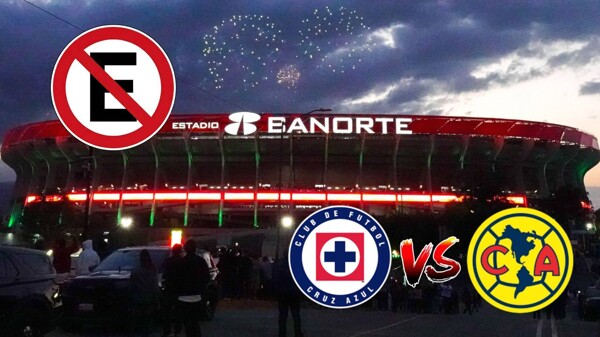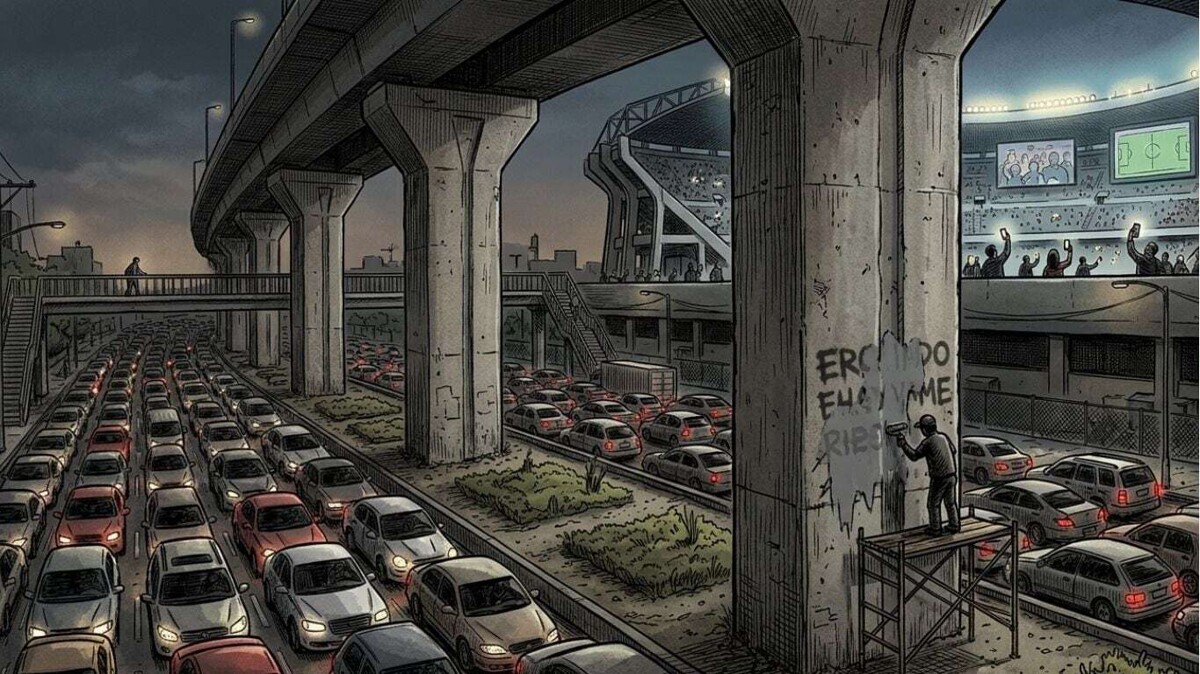
We have a capacity for adaptation that borders on masochism. The phrase, drawn with urgency but with brutal honesty, will survive a few hours before a crew covers it with the official gray paint used to manage oblivion. The idea of progress in Mexico City consists of amputating legs to wear brand-name sneakers. Football, the phenomenon that, according to Johan Cruyff, should be a joy so that people go to the stadium and enjoy, seems to be replaced by a 'user experience.' What hurts the most here is not even the ticket price, but the astonishing indolence of the Mexican character. We buy into the idea that the city is a disposable location. It doesn't matter that Calzada de Tlalpan collapses every Monday if the stadium looks impeccable on Instagram come Saturday. What is made clear is that instead of planning a city for 20 years, we set up a temporary stage to make it seem like we live with basic order. The 2026 World Cup is shaping up to be the party to which we are invited only as waiters. Let's see how the Tlalpan planters await their fate: to become the most expensive, inefficient, and ephemeral dumpster in sports history, while the true fan watches the game from their living room, seeing that their city, like their team, once again played as never before to lose as always. A few days ago, driving at that speed where movement merges with maneuvers in a parking lot, I managed to read a graffiti on one of the new second-floor columns being rushed into construction. They scored the goal from the planning office: to convince us that the contempt for daily life is a necessary sacrifice so the world can see us smile for ninety minutes is a red card to the mandate of citizenship that should live safely, calmly, and efficiently. We needed more lanes, but two of them were sacrificed to install planters in the middle of the asphalt, challenging trucks, common sense, and cyclists themselves. They are green patches, botanical cosmetics that will die of thirst or from wheel collisions weeks after the FIFA ball leaves here. To host five football matches, the authorities decided that Tlalpan should become a design bottleneck. The price of tickets is set in an economic and logistical stratosphere that the average fan, the one who knows the 'Atlas' lineup of the nineties by heart or suffers the via crucis of the light rail to get to Azteca, simply cannot afford. The stadium will cease to be a temple of collective catharsis to become an Instagrammable set for enthusiasts who confuse being out of place with a selfie. Concrete has a short memory, but the anxiety of the motorist stuck on Calzada de Tlalpan has a chronic depth. 'We don't want the World Cup, we want dignified transport,' it read. They limit our transportation, they make our lives more expensive, and they reduce public space, and our response ends up being a meme, a complaint in a taxi, or the resignation that a Tibetan monk would wish for himself.